
Own Home Forever may earn commissions from links on this page, at no extra cost to you. As an Amazon Associate, Own Home Forever earns from qualifying purchases.
Choose your ant-control option
For a home with babies and toddlers, the goal isn’t to find a pesticide you can simply call “safe.” The goal is to:
- identify the ant (or problem) correctly,
- use the smallest treatment area that works,
- choose the right treatment mechanism for that ant,
- keep every product completely inaccessible to children,
- follow the label exactly, and
- call a professional when the species or situation makes DIY treatment inappropriate.
Our researched ant-control shortlist, based on manufacturer information and the criteria above, not first-hand product testing:
Not sure where to start?
Common small, sweet-feeding household ants? Start with our colony-bait pick ↓
Need to address ants you can already see right now?
See our targeted contact-spray option ↓
Ants keep returning, the species is uncertain, or you can’t keep bait inaccessible?
Consider professional pest control ↓
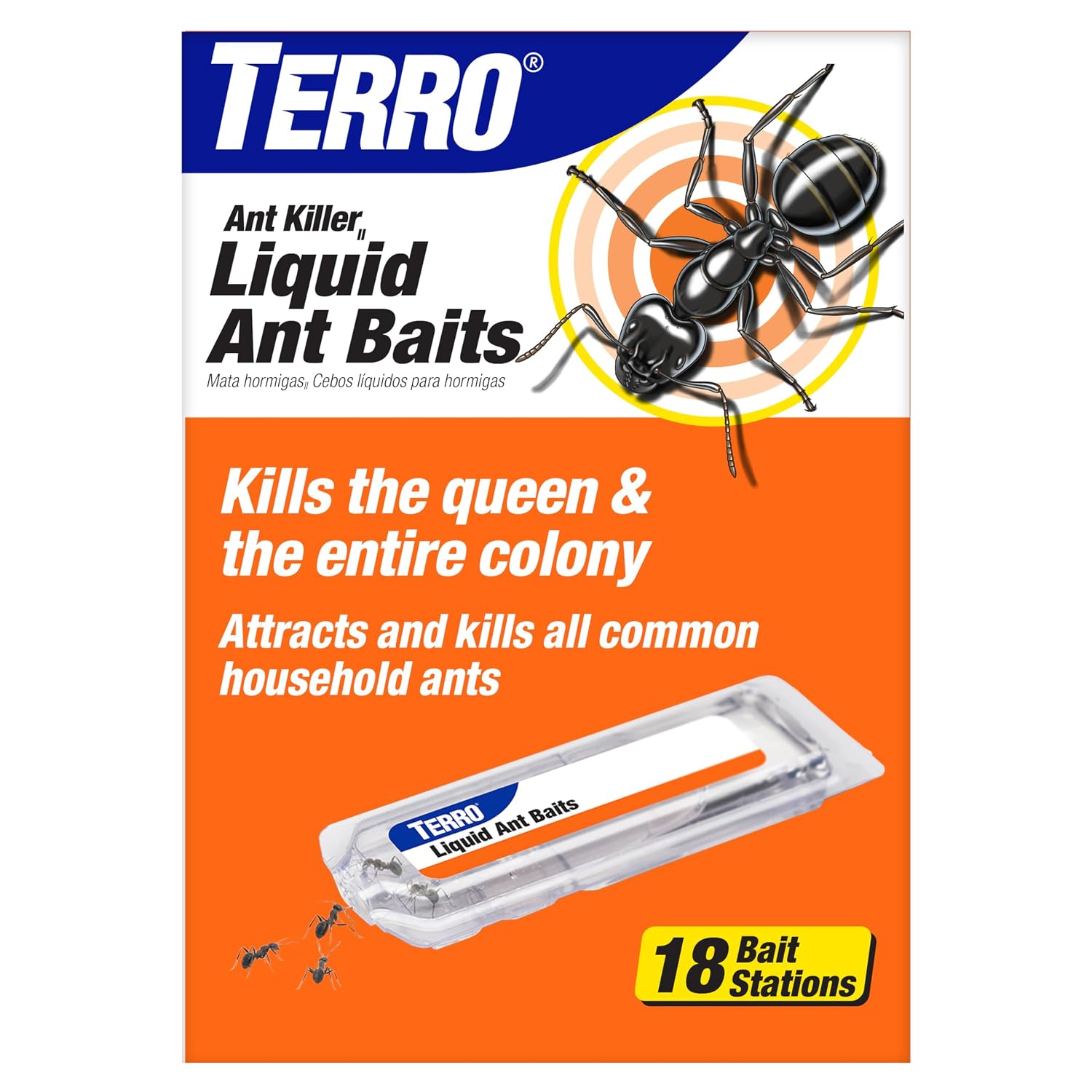
Best for colony control
TERRO Liquid Ant Baits (T300)
Best for:Best for common sweet-feeding household ants when you can place the bait completely out of children’s reach. Worker ants carry the bait back to the colony.
- Small, contained treatment footprint instead of broad surface spraying
- Colony-targeting mechanism: workers carry bait back to the nest
- Simple placement that does not require mixing or measuring
- Widely available and easy to replace
TreatmentColony-targeting bait
- Around kids
- Keep the entire bait station completely inaccessible to children. The enclosure is not child-proof.
- Not ideal for
- Fire, pharaoh, carpenter, or harvester ants. Confirm the ant species before choosing a treatment.
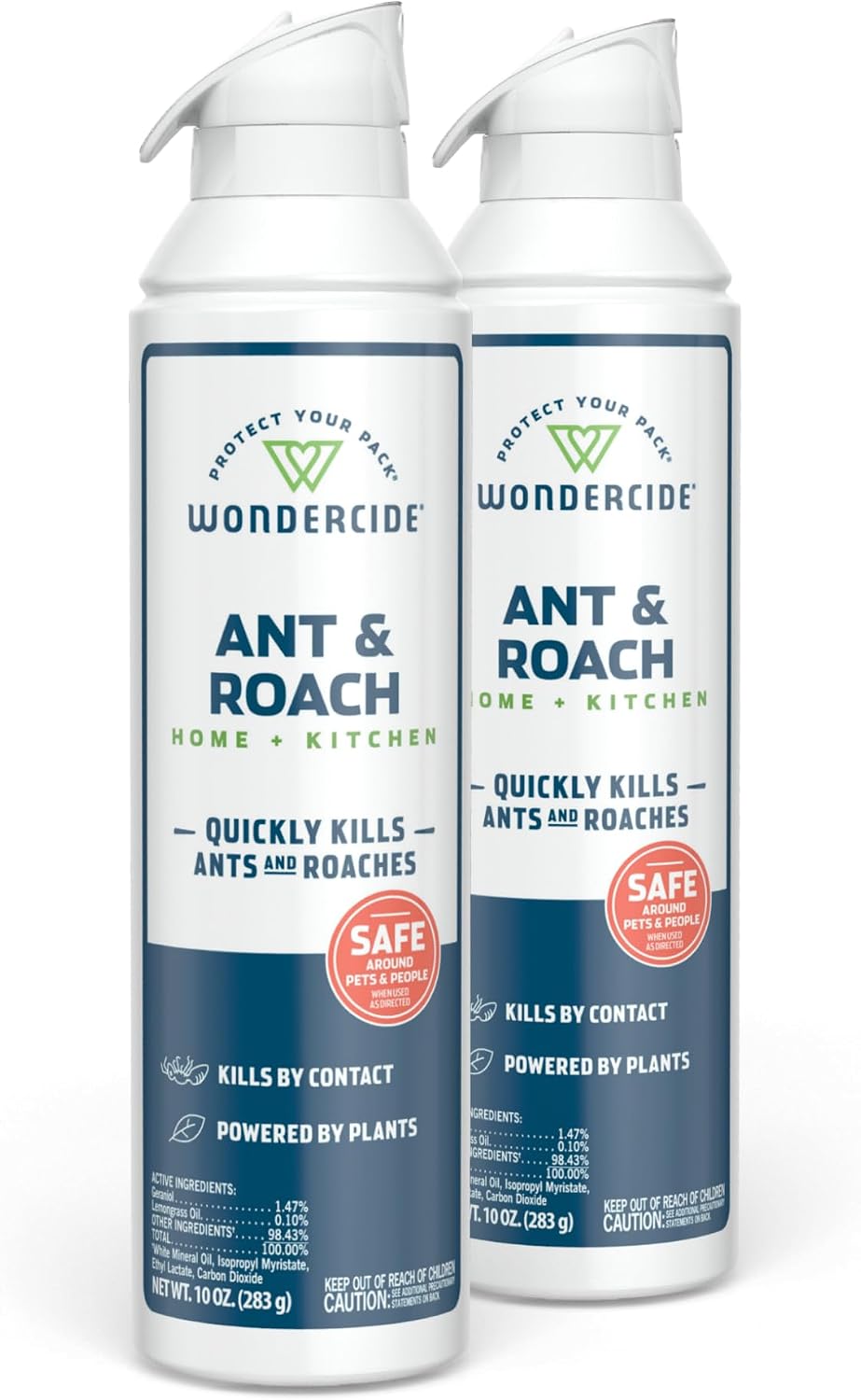
Best for visible ants on contact
Wondercide Ant & Roach for Home + Kitchen
Best for:Consider this for visible ants on permitted surfaces. A targeted application fits a limited-area plan; it is not a proven lower-toxicity choice.
- A targeted option for ants you can already see on a permitted surface
- Manufacturer markets it for use around family and pets when used as directed
- Useful when bait placement is not practical for the situation
TreatmentDirect contact kill
- Around kids
- Prevent contact with spray and residues. Clean up as directed; hard surfaces may become slippery.
- Not ideal for
- Not colony bait. Do not use on fabrics or plants.
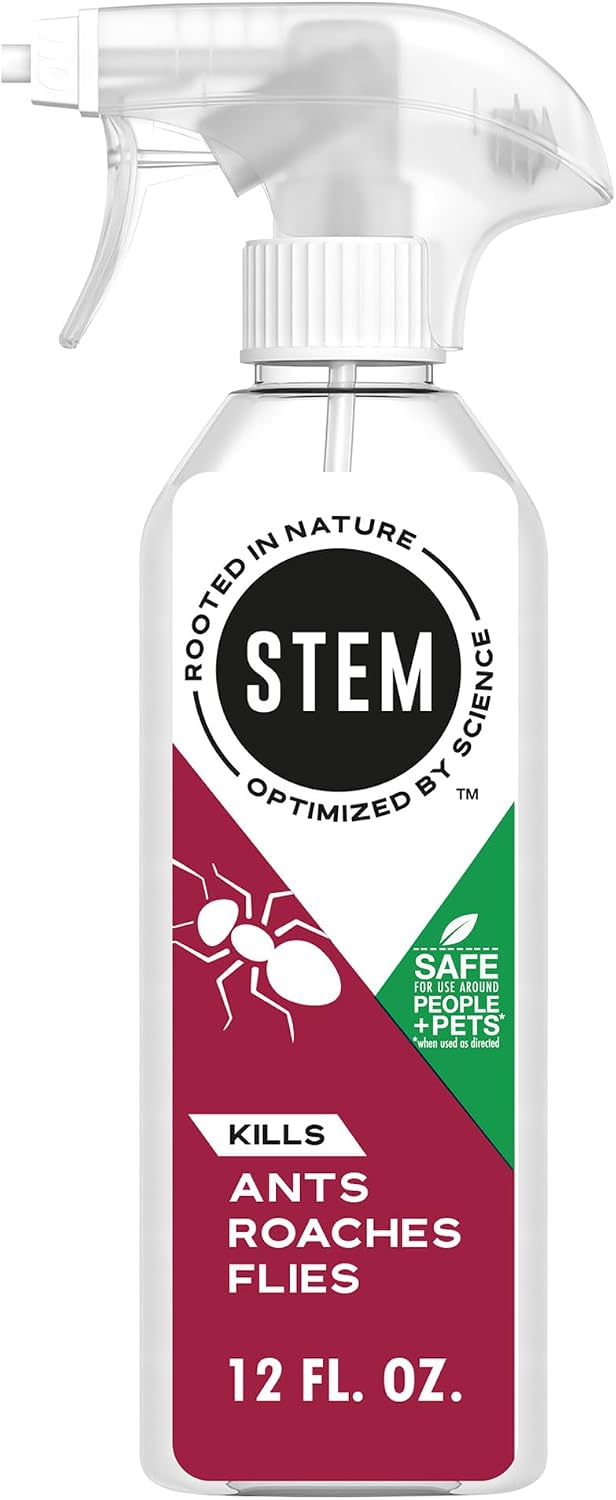
Budget contact-spray pick
STEM Kills Ants, Roaches & Flies (12 oz)
Best for:Consider this if you want one contact spray for ants, roaches and flies rather than an ant-only formula. Compare the current price and exact formula before choosing.
- One formula covers ants, roaches and flies instead of ants alone
- A lower-cost contact-spray option to compare against Wondercide
TreatmentDirect contact kill
- Around kids
- Follow the package precautions and wipe the targeted surface as directed. Keep children away as the label requires.
- Not ideal for
- This is the Ants, Roaches & Flies formula, not colony bait.
Best for persistent infestations
A licensed pest professional
Best for:Choose an inspection when ants keep returning or DIY placement will not work. Ask for an IPM plan that addresses the source.
- Correct species identification before choosing a treatment
- Access to broader treatment options than retail products
- A documented plan when DIY placement cannot stay inaccessible to children
TreatmentIdentification, prevention and targeted treatment
- Around kids
- Request written preparation, access and reentry instructions for your household.
- Not ideal for
- Verify licensing and treatment methods; a referral does not guarantee an IPM approach.
Use the vetting questions below to find and confirm a local provider.
Which option fits your situation?
| Option | Best for | Treatment approach | Child-access consideration | Main limitation |
|---|---|---|---|---|
| TERRO T300 | Common sweet-feeding household ants | Colony-targeting bait | Entire station must be inaccessible to children | Not labeled for fire, pharaoh, carpenter, or harvester ants |
| Wondercide Ant & Roach | Ants you can already see, on a permitted surface | Direct contact spray | Prevent contact until dry and cleaned per label | Not a colony-bait substitute |
| STEM Kills Ants, Roaches & Flies | Homes wanting one spray for ants, roaches and flies | Direct contact spray | Follow label precautions and surface cleanup | Not a colony-bait substitute; price/formula can change |
| Licensed pest professional | Persistent infestations or uncertain species | Identification, prevention and targeted treatment (IPM) | Ask for written access and reentry instructions | Cost; verify licensing and methods before booking |
How we chose these options
We compared products using the same criteria for every option, not marketing language:
- the treatment mechanism (colony bait vs. direct contact)
- whether treatment can be limited to a small, controlled area
- child-access and placement requirements
- ant-species limitations stated on the label
- manufacturer label and use instructions
- whether the product addresses individual insects or colony behavior
- practicality and availability
- when a professional is the more appropriate choice
These recommendations are based on manufacturer labeling, EPA and university extension guidance, and the criteria above — not independent lab testing or documented hands-on use.
Our approach: clean, seal, then treat
Clear food spills, seal pantry items, address leaks and close entry gaps. For odorous house ants, clean trails with soapy water before treatment. EPA and WSU Extension support these prevention steps.
When treatment is needed, our preference is the least extensive effective option. For ant treatment with a toddler in the house, placement is a deciding factor, not an afterthought. Our child-conscious pest-control framework explains how we assess products.
Enclosed bait: give it a chance to reach the nest
Slow-acting bait lets workers share insecticide-containing food with nestmates. WSU notes that odorous house ant populations can take two or more weeks to respond. Follow your product’s monitoring and replacement directions.
Never leave a station where a child can retrieve it. TERRO’s directions also say to avoid bait placement where insecticide has already been sprayed. Do not add spray around bait casually.
Contact spray: a specific insect, a permitted surface
Wondercide Ant & Roach and the listed STEM spray are contact treatments. They do not replace colony bait. Wondercide says this aerosol has not been tested for ant repellency; do not transfer claims from its separate Indoor Pest Control product.
For either spray, follow preparation, cleanup and reentry instructions. Keep children away during application and for the label-required period. “Dry” may not be the only requirement. EPA’s Citizen’s Guide covers these precautions.
When to call a professional
Get help if ants keep returning despite correct treatment, you cannot identify the species, you suspect carpenter ants or another structural pest, treatment cannot be kept inaccessible to children, or the infestation source is inaccessible. Ask for integrated pest management (IPM): identification, prevention and targeted treatment as appropriate.
Find local help—and ask these questions
Use EPA’s service-selection guidance to check licensing through your state regulator and compare local providers.
- Which ant species is this, and why is this treatment appropriate?
- What can we clean or repair before using pesticide?
- Which products and placements will you use? May we see the labels?
- How will you prevent child access, and when can we use each room again?
- How will you assess results, and what does follow-up cost?
Use the vetting questions below to find and confirm a local provider.
Bottom line
Choose bait for a suitable colony problem, contact spray for a defined local need, and professional help when DIY does not fit. Compare the product’s role and access requirements before following a retailer link.
Back to the Product Shortlist ↑
Quick FAQs
Is ant bait safe to use around kids?
Bait is only as safe as its placement. The station itself is not child-proof, so it must be somewhere a child cannot reach or move it. No enclosed bait or spray is inherently risk-free.
Can TERRO ant bait be used in a home with toddlers?
Per TERRO’s own directions, yes for labeled ant species, provided the entire station stays completely inaccessible to children. It is not labeled for fire, pharaoh, carpenter, or harvester ants.
Is a “natural” ant spray automatically safer for kids?
No. “Natural” describes an ingredient source, not a safety guarantee. Follow the label’s precautions and reentry instructions regardless of formula.
Is bait or spray better for an ant problem?
They do different jobs. Bait can reach ants back at the colony; contact spray only affects the insects it directly touches. Choose based on the ant species, whether you can place bait safely, and whether you’re treating a colony or a visible trail.
How do I know what kind of ant I have?
Size, color, trail behavior and where they nest vary by species. Take a clear photo and check your local extension office’s identification guide, NPIC’s resources, or ask a licensed pest professional to confirm before choosing a treatment — this matters most for carpenter, fire, and pharaoh ants.
What if a child touches or swallows a product?
Call U.S. Poison Control at 1-800-222-1222 (poison.org) with the product container available. For trouble breathing, seizures or unconsciousness, call 911. Follow the label’s first-aid directions. EPA exposure guidance.
Sources
·
EPA smart pest control
·
EPA Citizen’s Guide
·
WSU odorous house ants
· NPIC pesticide FAQs · America’s Poison Centers.
Product sources and directions are linked in each card. Selections reflect manufacturer information and the criteria in “How we chose these options” above, not original product testing.